
Mold in the Garage: Causes and Fixes for San Diego Homes
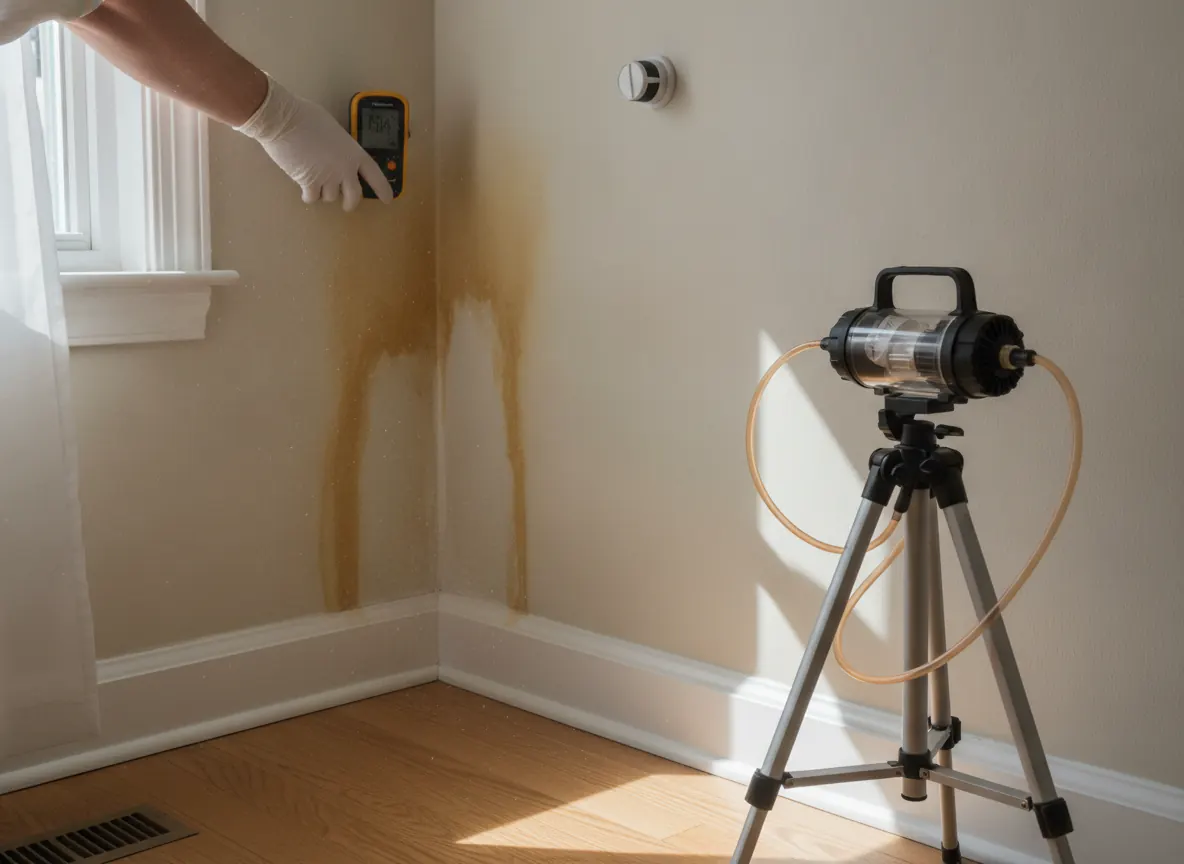
Garages are built to shelter cars, not people, so they get less attention than the rest of the house. They also hold a lot of the things that cause mold: water heaters, washers, old refrigerators, cardboard boxes, a concrete slab that sits on soil, and a big door that lets in weather. When the garage stays closed for weeks, a small leak or damp corner can turn into spotted drywall and musty boxes.
This guide covers the usual causes of garage mold in San Diego, CA homes, what you can clean yourself, when to get quotes, and the permit and fire-wall details that make garage repairs a little different.
The short version. Find the water first: an appliance leak, a roof leak, rain under the door or moisture through the slab. Get boxes off the floor and away from walls. Clean small spots on hard surfaces. Get quotes when drywall is wet or moldy over a larger area, especially on the wall shared with the house.
Common causes of garage mold
- Water heaters. In many Southern California homes the water heater sits in the garage. A dripping relief valve, a leaking tank or a corroded fitting can wet the slab and the drywall behind it.
- Washers and laundry sinks. Hoses and drain lines fail slowly, and the floor under the machine is rarely checked.
- Refrigerators and freezers. Old units can leak condensation onto the floor.
- Roof leaks. Garage roofs get less maintenance. In the few big storms each year, leaks show up as stained ceiling drywall or wet rafters.
- Rain under the door. Worn door seals and driveways that slope toward the garage let water run in.
- Slab moisture. Concrete slabs can wick moisture from the soil. Boxes, rugs or plywood laid directly on the slab trap it.
- Wet cars and gear. A car parked wet, surfboards, wetsuits and beach towels all add water to a closed room.
Why a closed garage stays damp in San Diego
San Diego is dry by rainfall: Lindbergh Field averages 9.79 inches a year, about 83% of it from November through March (NOAA 1991–2020 normals). Inland stations get more, with 11.63 inches at El Cajon and 14.52 inches at Escondido. The rain season is short, but it is when roof leaks and water under the door show up.
Near the coast, early-morning humidity runs around 80% in summer, a figure computed from NOAA hourly normals and best treated as approximate. A garage with no windows and the door shut most of the day holds onto that cool, damp air. Cardboard, paper and unpainted drywall absorb it. EPA advises keeping indoor humidity below 60 percent if possible, and a small hygrometer will show you where your garage sits.
What to check first
- Look at the appliances. Check the floor and wall around the water heater, washer and fridge for stains, rust and soft drywall.
- Check the ceiling. Look for stains or sagging drywall, especially after rain.
- Check the base of walls. Mold often starts at the bottom of drywall where it meets the slab, and behind stored boxes.
- Look at the door. After rain, see whether water comes in at the seal or the sides.
- Test the slab. Tape a square of plastic sheet to the bare concrete for a day or two. Moisture under it suggests the slab is wicking.
How to clean up small garage mold
EPA's homeowner guidance is commonly summarized as treating patches smaller than about 10 square feet, roughly 3 feet by 3 feet, as a job most people can handle once the water problem is fixed. Check EPA's current mold pages before relying on that figure.
- Fix the leak or water entry first.
- Wear gloves, eye protection and a mask, and open the garage door for airflow.
- Throw out moldy cardboard, paper and fabric. They are hard to clean and cheap to replace.
- Scrub hard surfaces such as metal shelves, sealed concrete and plastic bins with detergent and water, then dry them.
- Move storage onto shelves or pallets, a few inches off the slab and away from exterior walls.
- Use sealed plastic bins instead of boxes.
EPA advises drying water-damaged areas and items within 24–48 hours to prevent mold growth. After a water heater or washer leak, run fans with the door open until the slab and wall bottoms are dry.
When to get quotes
- Moldy or wet drywall over more than a small patch.
- Mold on the wall or ceiling shared with the living space.
- A musty smell coming into the house from the garage.
- Stained ceiling drywall below a roof leak or an upstairs bathroom.
- A garage converted to living space, which you should treat like any other room.
Companies typically fix or coordinate the moisture repair, contain the area, remove wet drywall and insulation, clean framing and dry everything before the rebuild. The water damage and mold page covers appliance leaks, and the attic mold page covers roof leaks that reach rafters.
Fire walls, permits and older materials
The wall and ceiling between an attached garage and the house is often fire-rated drywall. When it is replaced, the new material should match. In the City of San Diego, drywall repair or replacement in kind can go through a No-Plan permit, where the inspector verifies the fire-resistive type and attachment (DSD Information Bulletin 203, July 2024). Small like-for-like repairs of $1,000 or less with no electrical, plumbing or mechanical work need no building permit. Replacing a water heater or moving plumbing is trade work with its own permit rules. Outside the City, check with your city.
Any job of $1,000 or more, or any job that needs a permit, requires a CSLB-licensed contractor. In older homes, drywall joint compound and some ceiling textures may contain asbestos, so ask whether testing is needed before tear-out.
Insurance often turns on the cause. The California Department of Insurance (Jan 2026) says mold is usually excluded, sudden and accidental water damage is typically covered, and seepage or leaks are not. A burst water heater may be treated differently from a slow drip. Check your declarations page.
Before you hire anyone
California does not license mold inspection or remediation as its own trade, so checking credentials is up to you. The CSLB classification list has no mold class. Ask each company for:
- A CSLB license number for any job of $1,000 or more, any job that needs a permit, or any job with a crew. Look it up at cslb.ca.gov.
- IICRC or ACAC certification for the people doing the work, which you can check on iicrc.org and acac.org.
- A current insurance certificate.
- A written scope and protocol: what gets removed, cleaned and dried, and how the work area is contained.
- A plan for the moisture source, whether the company fixes it or a plumber or roofer does.
- Independent clearance testing after the work, from someone other than the remediation company, if you want proof it is done.
- A written contract for any home improvement job over $500 (Business and Professions Code 7159).
Frequently asked questions
Why is there mold in my garage?
Usually a water source: a water heater, washer or fridge leak, a roof leak, rain under the door, or moisture wicking through the slab. Closed garages with cardboard on the floor hold that moisture and give mold something to grow on.
Is garage mold dangerous to the rest of the house?
EPA says molds have the potential to cause health problems. Mold on the wall or ceiling shared with the house, or a musty smell coming inside, is a reason to get it checked. Ask a doctor about health concerns.
Can I clean mold in my garage myself?
Often, for small spots on hard surfaces once the water is fixed. EPA guidance is commonly summarized as treating patches under about 10 square feet as a homeowner job. Throw out moldy cardboard and get quotes for larger areas of wet drywall.
Do I need a permit to replace moldy garage drywall?
In the City of San Diego, small like-for-like repairs of $1,000 or less with no trade work are exempt. Larger drywall replacement usually goes through a No-Plan permit, where the inspector checks the fire-resistive type. Other cities have their own rules.
San Diego Mold Experts is a free quote service, not a mold company. You describe the problem once, and independent mold inspection and remediation companies serving San Diego, CA and nearby San Diego County towns may reply with quotes. Companies may pay to receive requests or calls, and they reply on their own schedules. Request free quotes or call (619) 489-9035.