
Air Duct and HVAC Mold Removal in San Diego, CA
Dark streaks around ceiling vents, a musty smell when the AC starts, or spots inside a ductless mini-split. Describe it once and independent mold companies serving San Diego, California and nearby towns can reply with free quotes. San Diego Mold Experts is a free quote service, not a mold company.
Get a Free Quote Call (619) 489-9035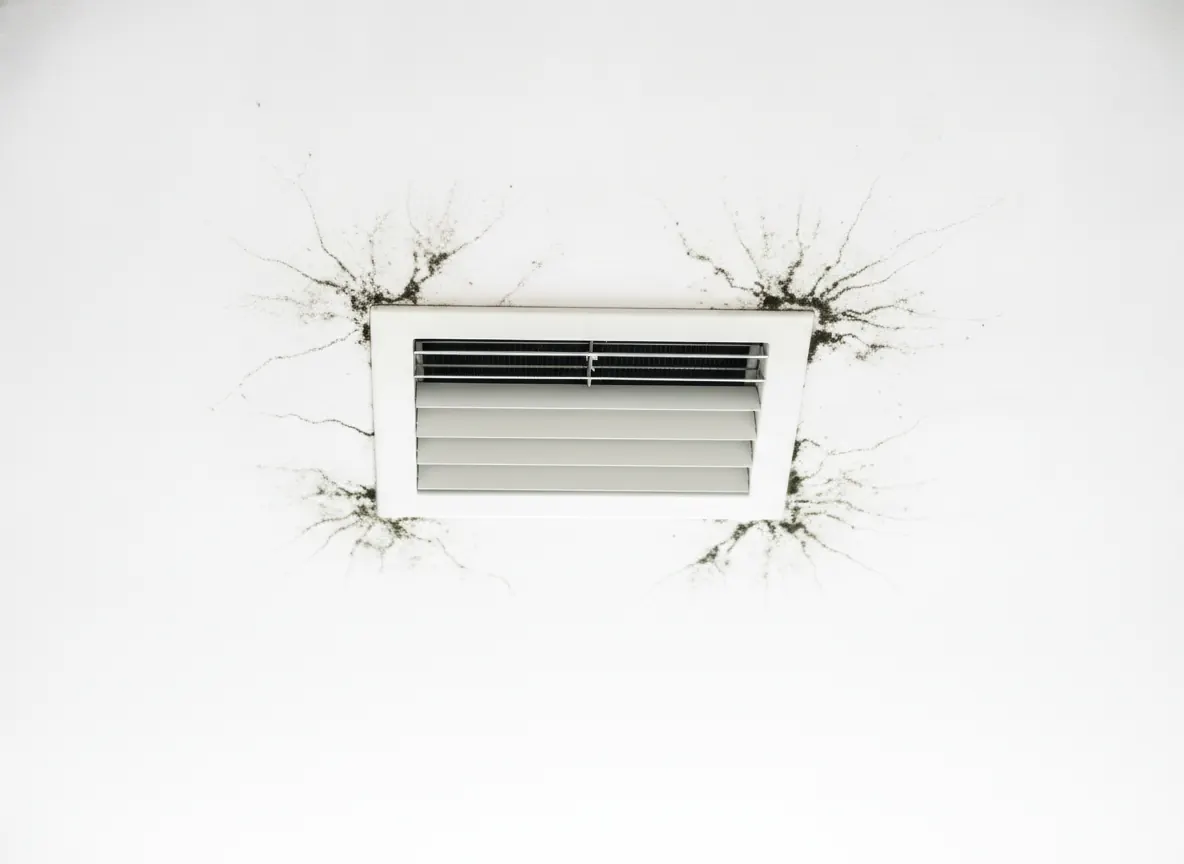
Signs of mold in air ducts and the AC unit
- Dark spotting on or around supply registers that comes back after cleaning
- A musty smell that starts when the system turns on
- Standing water in the drain pan, or a drain line that drips or backs up
- Visible growth on the coil, blower or inside the first few feet of duct
Dust can look like mold. For certainty, start with an independent mold inspection.
Why AC systems in San Diego County grow mold
Air conditioning pulls water out of the air. That water collects on the cold coil, drips into a pan and leaves through a drain line. When any part of that path clogs or stays wet, mold has what it needs.
Inland heat means long run times
The coast and the inland valleys run on different schedules. Lindbergh Field averages 3.0 days a year at 90°F or hotter, while El Cajon averages 56.8 days and Escondido 53.9 (NOAA 1991–2020). Systems in East County and inland North County run long hours in summer and early fall, so their coils and drain pans stay wet longer.
Ducts in hot attics
Many San Diego homes route ducts through the attic. Cold supply air inside a duct with damaged insulation can sweat on the outside, wetting the insulation around it. Leaky joints can do the same. If the attic itself shows staining, the attic mold page covers that side.
Coastal humidity
Near the coast, summer air carries more moisture. Mean dew points at Lindbergh Field reach about 62°F in August (computed from NOAA 1991–2020 hourly normals, approximate). EPA advises keeping indoor relative humidity below 60 percent, ideally between 30 and 50 percent.
Mold in mini-splits
Ductless mini-splits have no ducts to clean, but the indoor head holds its own coil, drain pan and a drum-shaped blower wheel. Moisture collects there every time the unit cools. Common causes of growth:
- A clogged or poorly sloped condensate line, so water sits in the pan
- Dirty filters that let dust coat the coil and hold moisture
- Running the unit in a closed, humid room, such as a bedroom near the beach
Specks on the louvers are easy to see, but the real growth is often on the blower wheel. A full cleaning usually means removing covers and sometimes the wheel.
What HVAC mold remediation typically involves
Find the moisture
Coil, pan, drain line, duct insulation and attic conditions are checked to see why things stayed wet.
Shut down and contain
The system is turned off and registers sealed so cleaning does not spread spores through the house.
Clean or replace
Metal ducts and coils can usually be cleaned. Wet duct board, lined duct or flex duct with growth is often replaced.
Fix the drain and humidity problem
Drain lines are cleared and sloped, insulation repaired and filters replaced.
Verify
Independent clearance testing, not the remediator's own, confirms the result before the system runs normally.
Work that touches mechanical systems falls outside the City's simple-repair permit exemption, so ask whether any part of the job needs a permit. See the process page.
What HVAC and duct mold work costs
For the full table and a calculator, see the mold remediation cost guide for San Diego.
| Item | Typical range | Source |
|---|---|---|
| HVAC / ducts | $3,000–$10,000 | Fixr · This Old House |
| Mold remediation, overall | $1,500–$9,000 (avg ≈ $3,500) · $1,200–$3,750 (avg ≈ $2,300) | Fixr, Aug 2025 · This Old House, Mar 2026 |
| Mold inspection / testing | $450–$800 (avg ≈ $500); inspection only $300–$600 | Fixr, Jan 2025 |
A single mini-split head is usually below these ranges. Insurance depends on the cause. The California Department of Insurance (Jan 2026) lists mold as usually excluded and leaks as usually not covered. Check your declarations page.
California rules box: HVAC jobs
California does not license mold inspection or remediation as its own trade, so checking credentials is up to you. The CSLB classifications show no mold category. You can check a CSLB license (required for repair work of $1,000 or more, any job needing a permit, or any job with a crew, since January 1, 2025), IICRC and ACAC certifications, and an insurance certificate.
Jobs over $500 need a written contract (B&P §7159). Signed at home, Civil Code §1689.6 allows 3 business days to cancel (5 for seniors), and 7 business days for repairs after a declared disaster.
Older homes may still contain asbestos, so testing before tear-out is best practice. County APCD Rule 1206 applies to buildings with 5 or more units (survey, then 10 working days' notice for 100+ sq ft disturbed), not to buildings with 4 or fewer.
City of San Diego permits (IB 203): like-for-like repairs of $1,000 or less with no electrical, plumbing or mechanical work need no permit, including up to 100 sq ft of drywall replaced as part of such a repair. Larger jobs need a No-Plan permit; historic homes are excluded. In other cities, check with your city.
Questions to ask each company
- What is your CSLB license number for repair work?
- Which IICRC or ACAC certifications do you hold?
- Can I see a current certificate of insurance?
- Will I get a written protocol and scope?
- Is clearance testing done by an independent company?
- Does my home's age call for an asbestos check?
- What caused the moisture, and who fixes it?
- Will I get a written contract under §7159?
- Do you clean mini-split heads yourself, or bring in an HVAC contractor?
Quotes are available across San Diego County, including El Cajon, Escondido, Poway and Oceanside. See every town on the service areas page.
HVAC and duct mold questions
Can I clean mold off my AC vents myself?
Surface spotting on a register cover can often be cleaned, and the cover can be removed and washed. If the growth comes back, appears on several vents, or you can see it inside the duct or on the coil, the source is upstream. That calls for an HVAC check and a written mold scope rather than repeated wiping.
How do I know if my mini-split has mold?
Look into the indoor head with a flashlight. Dark specks on the vanes or the blower wheel, a musty smell when the unit starts, or water dripping from the head are common signs. The blower wheel and coil sit behind the front panel, and a thorough cleaning usually means taking the head partly apart, which is a job for a trained technician.
Does a duct cleaning remove mold?
Not always. Ordinary duct cleaning moves dust and debris, while mold work also deals with the moisture source, the coil and pan, and duct materials that cannot be cleaned, such as wet duct board or lined ducts. Ask whether the quote is for cleaning, for mold remediation, or for both, and what happens to porous materials.
How much does HVAC mold remediation cost?
Published national estimates put HVAC and duct mold work at about $3,000 to $10,000 (Fixr; This Old House, Mar 2026). A single mini-split head is usually a smaller job, and full duct replacement can exceed the range. Your quotes come from independent companies, not this site.
Get HVAC mold quotes in San Diego
Say whether you have central air, a heat pump or mini-splits, which vents or rooms are affected, and whether the drain line has backed up. Photos can come later.
San Diego Mold Experts is a free quote service, not a mold company. Companies that receive requests may pay San Diego Mold Experts for them, they are independent of this site, and companies reply on their own schedules. No obligation, and you choose who to hire, if anyone. Prefer to talk? Call (619) 489-9035
Found mold or a musty smell? Get free quotes.
Describe it once and independent mold companies serving San Diego County can reply with no-obligation quotes.